
Nigeria is undergoing a demographic shift that receives far less attention than it deserves.
According to the United Nations World Population Prospects (2022), the number of Nigerians aged 60 and above is projected to more than double between 2020 and 2050.
https://population.un.org/wpp/
This growth is not theoretical. It is already underway.
Yet national systems for healthcare access, social protection, and structured elder engagement remain limited.
The country is aging, and our preparation is not.
The Quiet Marginalization of Older Adults
I was reminded of this reality on March 20, 2025, during the Onyinye Mbanefo Foundation’s first community outreach for older adults in Uyo, Akwa Ibom State.
The event itself was simple. Older adults arrived gradually, some accompanied by family members, others on their own. There was no spectacle. Just chairs arranged carefully, nurses preparing screening tools, and quiet conversations beginning to form.
As routine blood pressure checks were conducted, something became evident. Several participants admitted they had not monitored their health unless symptoms became severe. One man explained that he only visits the hospital “when the body can no longer carry itself.” Another woman mentioned that transportation costs alone often discourage regular clinic visits.
But beyond health concerns, a deeper sentiment emerged.
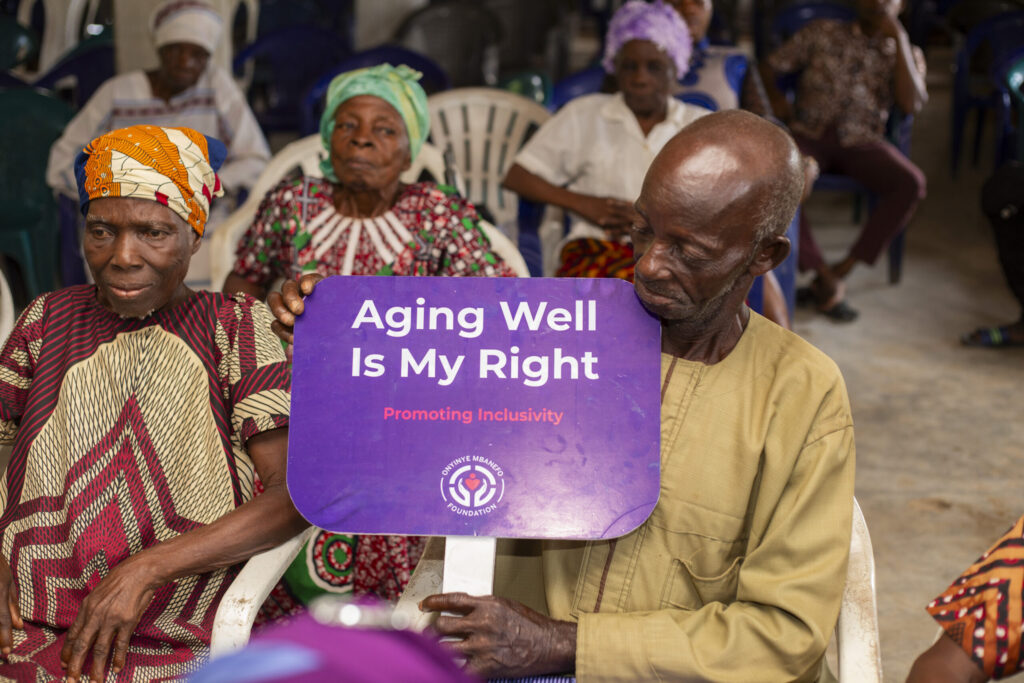
After the screening, one participant said, “I thought we had been forgotten.”
Another added, “Programs are always for the youth. Nobody calls us.”
An elderly man reflected, “We are still alive, but it feels like we are no longer seen.”
Others expressed gratitude in ways that revealed absence more than satisfaction:
“Thank you for remembering us.”
“At least today, someone thought of us.”
“It feels good to know we still matter.”
These were not emotional outbursts. They were steady, almost matter-of-fact observations. And that is what made them powerful.
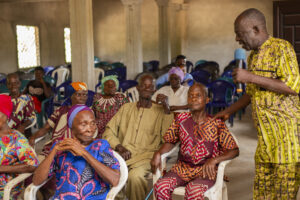
The outreach provided basic services like health checks, conversation, and food support. Yet the response suggested that the need extended far beyond medical screening. What many were describing was invisibility.
When small acts of engagement feel extraordinary, it often means neglect has become ordinary.
What we witnessed in Uyo was not an isolated experience. It reflected something structural. It revealed how rare it is for older adults to be invited into spaces intentionally created for them.
The World Health Organization notes that in many low- and middle-income countries, health systems remain insufficiently prepared for population aging, with limited integration of geriatric care into primary healthcare services.
https://www.who.int/news-room/fact-sheets/detail/ageing-and-health
Nigeria reflects many of these same structural limitations.
And that rarity is not accidental. It is rooted in how our systems are designed.
Nigeria’s social infrastructure is not designed with aging in mind. While family systems have historically absorbed elder care responsibilities, urbanization, migration, and economic pressures are reshaping those traditional safety nets. Adult children increasingly live in different cities or countries. Caregiving responsibilities are stretched. Informal support systems are weakening.
Yet policy discussions rarely center older adults.
Healthcare systems rightly emphasize maternal and child health, but preventive geriatric care receives limited attention. Community programming focuses heavily on youth engagement. Social protection systems remain thin, fragmented, or inconsistently implemented.
The result is not overt crisis.
It is quiet neglect.
Older adults manage chronic illnesses without consistent monitoring. They navigate rising healthcare costs on fixed or limited incomes. They experience isolation without structured avenues for social engagement. And because these realities unfold gradually, they remain largely excluded from national discourse.
Nigeria does have a National Policy on Ageing (2021), which acknowledges the rights and welfare of older persons.
https://socialprotection.gov.ng/wp-content/uploads/2021/02/National-Policy-on-Ageing-2021.pdf
However, recognition on paper has not yet translated into fully integrated, adequately funded, and consistently implemented systems of geriatric care and social protection.
This gap will widen if ignored.
Demographic projections make one thing clear: Nigeria’s older population will continue to grow substantially in the coming decades. Without structural preparation, local communities will face increased strain on healthcare facilities, greater caregiver burden, and heightened vulnerability among older populations.
What would preparation look like?
It would mean strengthening preventive healthcare access for older adults at the primary care level. It would mean structured community-based programs that reduce isolation and provide routine health monitoring. It would mean social protection mechanisms that are accessible, efficient, and responsive. It would mean collecting reliable data on aging to inform policy decisions.
Most importantly, it would mean recognizing that aging is not a peripheral issue.
It is a development issue.
When older adults are healthy, socially connected, and economically stable, communities are stronger. They contribute wisdom, caregiving, cultural continuity, and stability. Ignoring their needs is not only unjust, it is short-sighted.
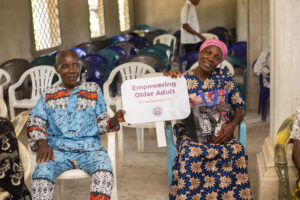
Our outreach in Uyo was small in scale, but it reflected a larger national question:
Are we building systems that allow Nigerians to age with dignity?
When lived experiences of invisibility intersect with clear demographic projections and acknowledged structural gaps, the conclusion becomes difficult to avoid.
Right now, the honest answer is no.
But that answer does not have to remain permanent.
Preparation requires intention. It requires political will. It requires community action. It requires moving aging from the margins of policy conversations to the center.
Nigeria has an opportunity to act before demographic change becomes pressure.
The time to prepare is now.

10 Responses
Indeed we must make conscious effort to act and prepare for our aging population because the preparations we make today will be useful to us tomorrow
I used to assume that we care about our elders in Nigeria compared to other places, until I read this article. Hopefully we can do better!
Thank you to Onyinye Mbafeno Foundation!
I completely understand that perspective; many of us grew up believing that elder care is one of our strengths. This article really highlights how shifting realities are testing that assumption. The good news is that awareness is the first step toward meaningful change.
I completely understand that perspective; many of us grew up believing that elder care is one of our strengths. This article really highlights how shifting realities are testing that assumption. The good news is that awareness is the first step toward meaningful change.
Here’s a concise and intentional discourse on a subject that forms an integral part of who we are as a people. The urgent need for a working policy that protects geriatric concerns cannot be overemphasized. Policy makers, appropriate government bodies and civil society organizations should as a matter of keen importance fuse synergy to protect our aging population which legally forms one the most vulnerable population in every ideal human society. A country without a balanced sense and act of patriotism, such that extends beyond singing national anthems and pledges, to the extent of a sense of safety and sense of belonging to everyone especially those who fall under the category of “Vulnerable population”, such a country is still dabbing in confusion and chaos.
Thank you for such a powerful reflection. The link you’ve drawn between patriotism and the protection of vulnerable populations is particularly striking. It reinforces the idea that beyond policies, there must be a collective commitment to ensuring dignity, safety, and inclusion for older adults.
Very good i like it
Good one
I’m glad this brought a new perspective on geriatric care. We’d love to have you follow along for more insights and discussions.
wish you all the best