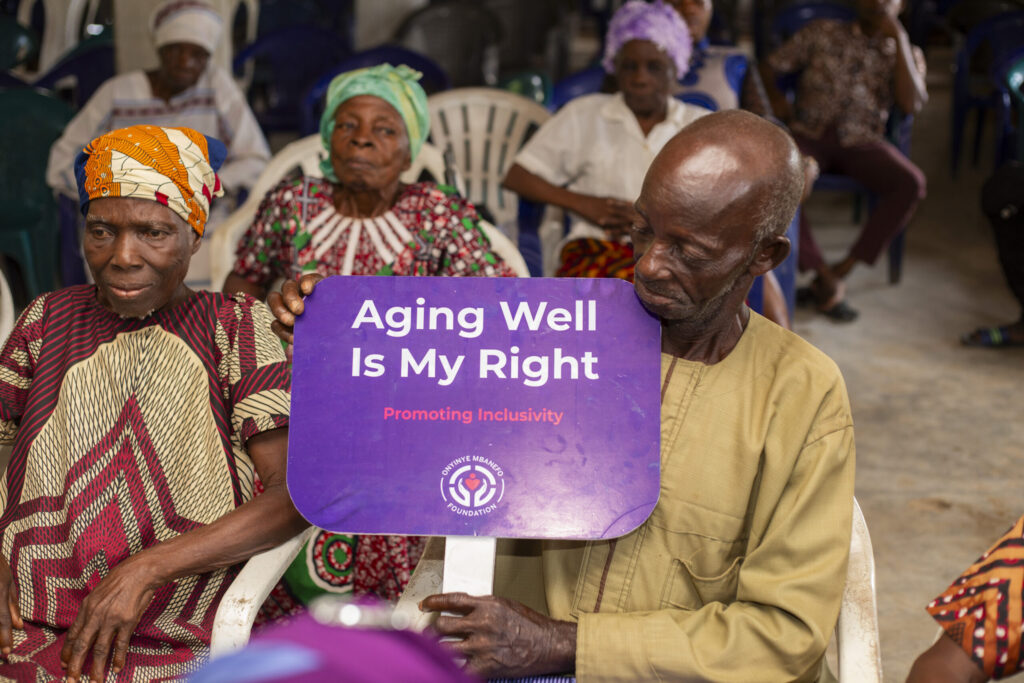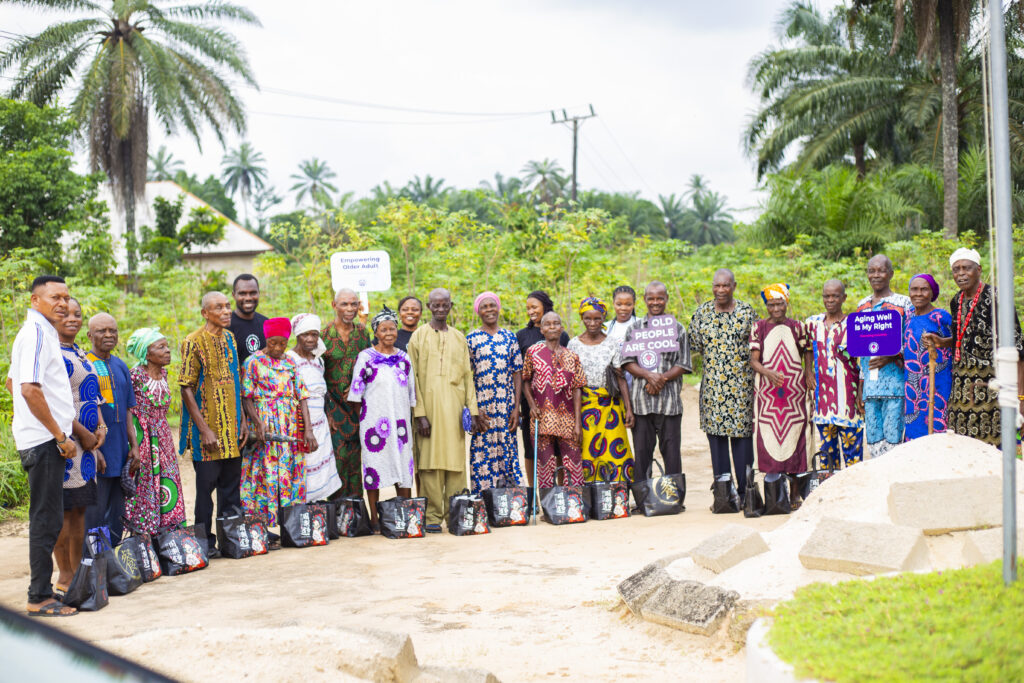

We all hope to grow old.
But do we respect people who already have?
Across Nigeria, aging is often linked with words like weak, sick, forgetful, or dependent. These ideas are common. They are repeated casually. Sometimes they are even joked about.
But they shape real attitudes.
And real attitudes shape how older adults are treated.
At OMF, we believe it’s time to rethink what we assume about aging using dignity, evidence, and common sense.
Let’s challenge a few myths.
Myth 1: “Old Age Means Constant Illness”
Yes, health risks can increase with age. But aging itself is not a disease.
The World Health Organization explains that healthy aging is about maintaining functional ability the ability to move, think clearly, make decisions, and stay connected to others (https://www.who.int/news-room/fact-sheets/detail/ageing-and-health)
Many older adults remain active, engaged, and independent. What often affects health in later life is not age alone but access to healthcare, social support, and living conditions.
Growing older does not automatically mean becoming helpless.
Myth 2: “Older People Can’t Learn New Things”
Have you ever heard someone say, “Leave it, they won’t understand”?
Yet many older Nigerians use smartphones, video calls, digital banking, and social media. The ability to learn does not disappear with age.
Learning is lifelong and research shows that prove that older adults have the capacity to learn new skills which is beneficial for their health and overall wellbeing. (https://www.tandfonline.com/doi/full/10.1080/03601277.2025.2515562#abstract)
What older adults often need is patience and opportunity not dismissal. Learning does not have an expiry date.
Myth 3: “Older Adults Are a Burden”
This is one of the most harmful assumptions.
Older adults contribute deeply to families and communities. They care for grandchildren. They mediate conflicts. They preserve culture and tradition. They provide emotional stability in times of crisis.
The United Nations recognizes older persons as active contributors to society (https://www.un.org/en/observances/older-persons-day). When we label them as burdens, we ignore their value and lived experience.
Aging is not dependency. It is continuity.
Myth 4: “Memory Loss Is Just Normal Old Age”
Yes, some changes in memory can happen over time. But serious memory decline is not simply “old age.”
Conditions such as dementia are medical conditions and are not automatic results of aging (https://link.springer.com/article/10.1186/s12889-022-14578-8). When we assume decline is “normal,” families may delay seeking support.
Awareness protects dignity.
So, What Needs to Change?
Nigeria is gradually experiencing longer life expectancy. More people are living into older age. That means our thinking must evolve too. Aging is not:
- Failure
- Uselessness
- A social burden
Aging is:
- Experience
- Resilience
- History
- Potential
Older adults are not one group. They are diverse — in health, strength, education, and ability. Respecting aging means recognizing that diversity.
Let’s Start the Conversation
- What messages about aging did you grow up hearing?
- Have you seen older adults treated unfairly because of assumptions?
- What should change in how we talk about aging in Nigeria?
Share your thoughts in the comments. This is the beginning of a larger conversation and your voice matters.
At OMF, we are committed to building a future where growing older is not feared or dismissed, but respected and supported.
Because aging is not someone else’s story.
One day, it will be ours too.